The Discomfort
Reading The Palace of Illusions is a strangely unsettling experience. Divakaruni’s retelling immerses you in Draupadi’s mind—her longings, frustrations, and moral reflections—but it also forces you to confront ethical tensions: a man who harmed her dies noble without apology, her husbands repeatedly fail her, and righteousness in war is more complicated than it seems. This discomfort is precisely what makes the book compelling, prompting readers to question heroism, justice, and forgiveness.
Karna: Regret Without Accountability
Divakaruni humanizes Karna in a way that feels emotionally layered. His internal conflict, regret, and poetic longing add psychological complexity to a figure often remembered only for his misdeeds. However, this humanization has ethical consequences. Karna confesses his failings to Bhishma but never personally apologizes to Draupadi, yet he is granted narrative and cosmic redemption. Confession to another man is not accountability; internal guilt is not justice. His ego remains intact, and while he dies noble in his own story, Draupadi’s moral and emotional experience is sidelined. This tension between empathy for Karna and ethical responsibility is central to the discomfort the book creates.
Draupadi: Immaturity, Yearning, and Complex Choices
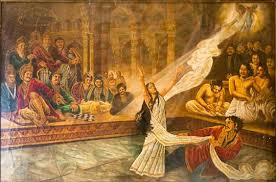
Divakaruni brings Draupadi vividly to life, showing her passion, intelligence, and emotional intensity. Yet her character is often frustrating. Her immature handling of Karna, her yearning, and lack of direct confrontation fail to assert clear boundaries. She stays with the Pandavas—the same men who did not defend her during the dice court insult—criticizing them throughout the 12 years in exile instead of choosing her young children. These choices are ethically complicated. While the book hints at her regret and reflection later, it is mostly internal and does not offer her full closure or independent empowerment. Here, Divakaruni gives us real emotional texture, but sometimes at the expense of clear moral guidance.
Righteousness and the Pandavas’ Moral Contradictions
Divakaruni deserves applause for acknowledging that the war is morally ambiguous. Even the Pandavas—who constantly speak of dharma—often act through cunning, betrayal, or opportunism. Killing Karna unarmed, Bhima’s vengeance, and Arjuna’s strategic deceit show that righteousness is complicated. The narrative balances admiration for the Pandavas’ virtues with recognition of their flaws, highlighting the tension between moral ideals and actions.
Oh, the Beloved, Krishna!
Oh, the Beloved, Krishna—magnetic, clever, and impossibly charismatic—glides through the story like a force of fate. Divakaruni shows him as loving, wise, and a guiding presence for Draupadi and the Pandavas, yet always pulling strings behind the scenes. He nudges Arjuna, orchestrates Karna’s downfall, and shapes the course of the war, often using people’s hearts and choices as pieces on his board. It’s hard not to wonder: does his vision truly lead to a greater good, or is it a Thanos-like calculus, where the ends justify massive human cost? Is his guidance justice, strategy, or something in between? Krishna’s brilliance, his secrets, and his selective interventions leave us enthralled, challenged, and unsure—exactly the tension that makes him unforgettable.
Conclusion
The Palace of Illusions is a beautiful, lyrical exploration of Draupadi’s mind, making her one of literature’s most emotionally vivid heroines. Divakaruni applauds female interiority, emotional depth, and moral questioning, but the book also challenges readers with ethical tensions: Karna’s unearned redemption, Draupadi’s immaturity, and the Pandavas’ moral compromises. The novel is at once engaging, lyrical, and thought-provoking, leaving readers both moved and morally unsettled—a sign of its narrative power.
Let me know your thoughts in comments.

Leave a comment